
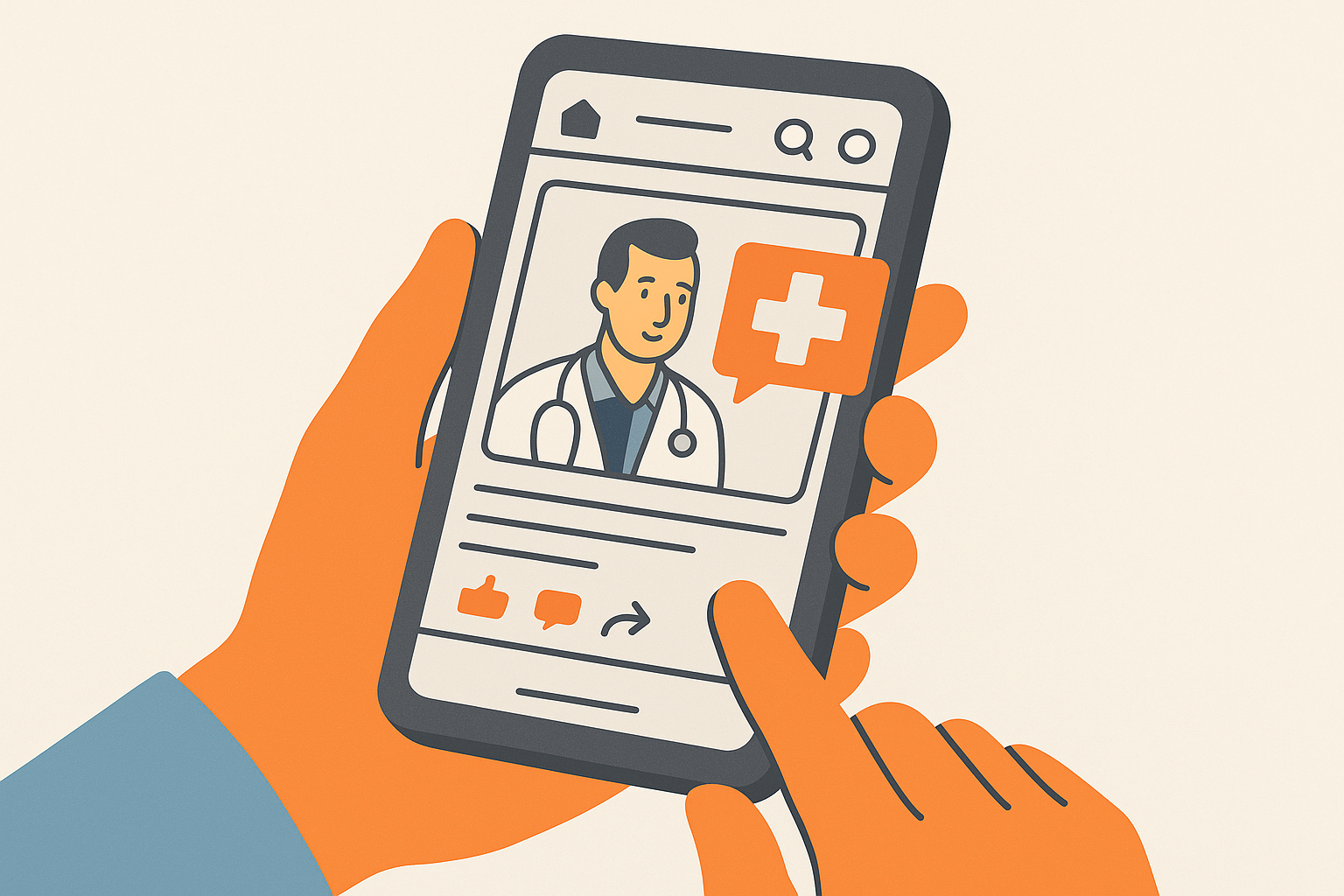
Why Patients are Turning to Social Media for Medical Advice

For decades, the U.S. healthcare system has positioned itself as the most authoritative source of medical knowledge. But today, trust in that system is eroding. More patients are seeking health information on social media platforms like TikTok and Youtube, and even turning to AI-driven search tools for medical advice.
The Growing Trust Gap in Traditional Healthcare
According to recent survey data, most U.S. adults no longer trust health information from the federal government, including Congress, the President, and even the Department of Health and Human Services. This distrust also extends to hospitals, insurers, and healthcare providers, where perceptions of high costs, bureaucracy, and lack of accessibility fuel frustration.
As this trust gap widens, patients are increasingly filling the void with social media health advice and AI-powered search engines.
Social Media as the New “Doctor Google”
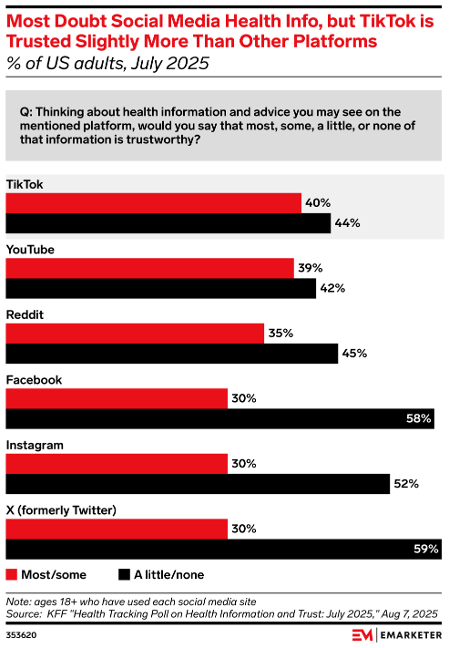
Research from the Kaiser Family Foundation (July 2025) found that 40% of U.S. adults consider health information on TikTok trustworthy, a higher credibility rating than other platforms. YouTube also scored relatively high, suggesting patients feel more confident with video-based health content from creators, influencers, and peers than official institutions.
Patients aren’t blindly believing everything they see online. Instead, they’re filtering advice through communities, fitness coaches, nutritionists, and influencers, voices that feel more relatable than traditional healthcare channels. This aligns with trends highlighted in “Pharma Influencer Marketing: Building Trust & Reaching New Audiences”.
The Rise of AI in Healthcare Research
It’s not only social platforms reshaping behavior. According to Kaiser, 14% of U.S. adults use ChatGPT, Perplexity, or Gemini to research medical questions, and 11% use AI to navigate the healthcare system.
The signals that patients are seeking:
- Immediate answers without waiting for appointments
- Accessible explanations free from medical jargon
- Guidance on next steps, from treatment options to insurance navigation
Opportunities and Risks for Healthcare Brands
The shift toward social media advice and AI-driven healthcare searches presents both opportunities and risks:
Opportunities
- Partner with credible creators on TikTok and YouTube
- Optimize health content for discoverability in AI and search engines
- Deliver clear, transparent messaging that builds trust (HCP Social Media Usage for Work Continues to Expand)
Risks
- Misinformation is spreading faster than corrections
- Fragile trust breaks if content feels biased or promotional
- Patients making medical decisions without professional guidance, underscoring the need for “Vetting and moderating Pharma Influencers.”
How the Healthcare Industry Can Rebuild Trust
If the healthcare industry wants to remain the go-to source of truth, it must learn from platforms where patients already spend their time. That means:
- Accessibility: Provide plain-language content that patients can easily understand.
- Transparency: Acknowledge system flaws and show how problems are being addressed.
- Partnerships: Collaborate with trusted social voices to deliver accurate, relatable advice, as seen in “ The Unique Value of Social Media Comments in Pharma”.
- Innovation: Use AI as a complement to medical professionals, helping patients find trustworthy answers faster.
Bottom Line
Patients aren’t waiting weeks for a doctor’s appointment or wading through insurance paperwork anymore. They’re searching TikTok at midnight or asking AI for immediate clarity.
Healthcare organizations that fail to adapt risk losing their authority. Those that embrace social media engagement and AI integration can rebuilt trust, reach patients directly, and secure their role as the most credible source of health information in the digital age. For more on future trends, see “2025 Pharma Digital Marketing and Social Media Trends.”