
What Life Science Marketers Should Expect From Social Media In 2026

It’s almost 2026, which feels strange to say, but here we are.
And with every new year comes big shifts in social. Looking back at 2025, we started the year with Community Notes on Meta platforms. Then TikTok disappeared, returned, and stayed in limbo. Threads is nearly caught up to X in daily active users, and while Bluesky’s momentum slowed, it still holds a solid and active community. Reddit has continued to gain momentum with ads and brands exploring subreddits.
Those are just the highlighs updates give us a good sense of where social media is heading in 2026. I think in the next year we will see engagement become stagnant/decrease across branded social media content that uses social to broadcast a message. It’ll be more important than ever to truly understand the social media landscape and how people are engaging with it. Without that understanding, everything you post/share will go unnoticed.
Here are my top predictions for the year ahead:

- More Long-form Content
Short-form video is here to stay, but long-form content is making a strong comeback. We’re seeing more episodic videos, blogs, and creator newsletters.
Substack, in particular, is growing fast. Creators use it to diversify platforms, but brands are starting to join as well. While I haven’t seen many life science companies there yet, several research institutions and colleges have begun posting. Alongside academic discussions, creators are using the platform to talk about their disease states and experiences. Engagement varies by topic, but it’s strong enough to suggest that life science brands should consider adding Substack to their mix. Even if it’s not for branded use, showing up through corporate comms could help combat misinformation and build trust.
Some Substack examples:
Video also remains strong across both long and short formats. Every major podcast now includes video, and the good news for life science marketers is that every platform supports long-form video. I’ve even pulled together a chart of maximum video lengths (ads and organic), sourced directly from each platform’s FAQs. If something is wrong, blame them, not me.

The best part of long-form content is how adaptable it is. It can be clipped, edited, and repurposed into short-form content, a trend that’s exploded this year.
- Creators Are The New Media Companies
This isn’t new, but it’s accelerating. As traditional television continues to fade, creator-led media is taking its place. Big names in the creator economy are forming their own production networks and talent rosters, similar to BuzzFeed’s golden days. Think Try Guys, Mythical Entertainment, Smosh, and Dropout.
In 2026, influencer partnerships will move beyond one-off collaborations (tbh, they already have moved). Brands should start thinking about how to grow within these creator ecosystems, where audiences already trust and engage deeply. Especially in healthcare, where personal experience matters, creator partnerships bring humanity to science.
Even with the FDA’s influencer letters on the horizon, creator collaborations aren’t going anywhere. Expect to see brands experimenting with patients and HCP creators alike, blending storytelling with data to strengthen credibility and connection.

- Algorithms Become Customizable
Early in 2025, TikTok let users fine-tune their algorithm. Instagram is now testing topic-based customization. X is experimenting with prompts to tell Grok what to show more or less of. And Threads is internally testing something similar.
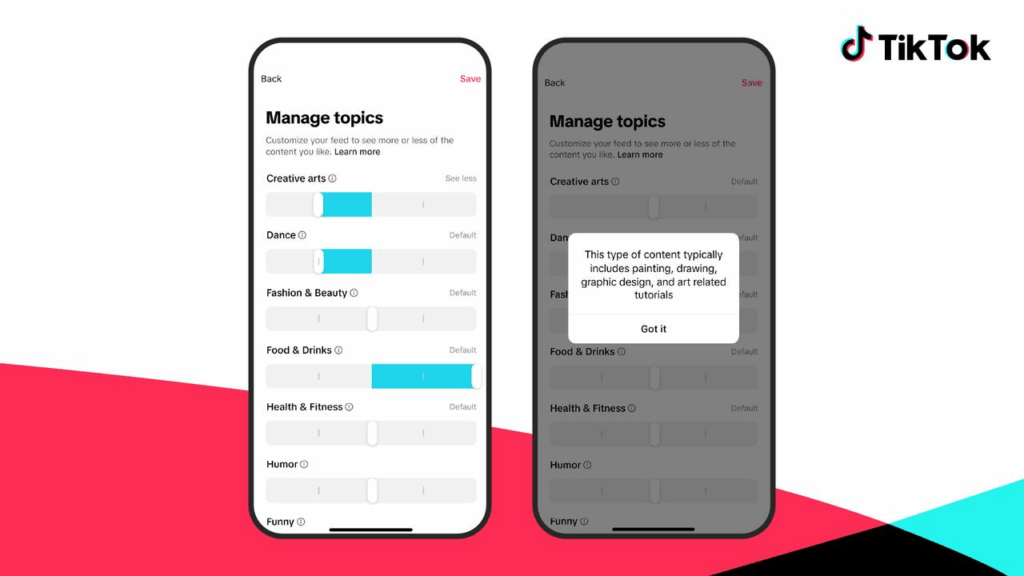
Image Source: TikTok Newsroom
Users will soon have real control over what they see. This means your content must resonate, not interrupt. Relevance and authenticity will be key to staying visible. This also means that one of the most common metrics to measuring a social accounts health, follower count, will matter less. Because people may engage with your content again and again, but never even follow you.
As more life science companies move toward direct-to-consumer models, this shift matters even more. You can’t build trust by only running ads. You need to meet audiences where they are, speak their language, and provide genuine value. With customizable algorithms actually starting to happen, the content you are sharing needs to provide value to people or you may not even show up on their feed.
- Dedicated YouTube Strategy
YouTube remains one of the most important and most underused platforms in life sciences. With 2.5B MAUs (monthly active users), it is only being beaten by Meta platforms.
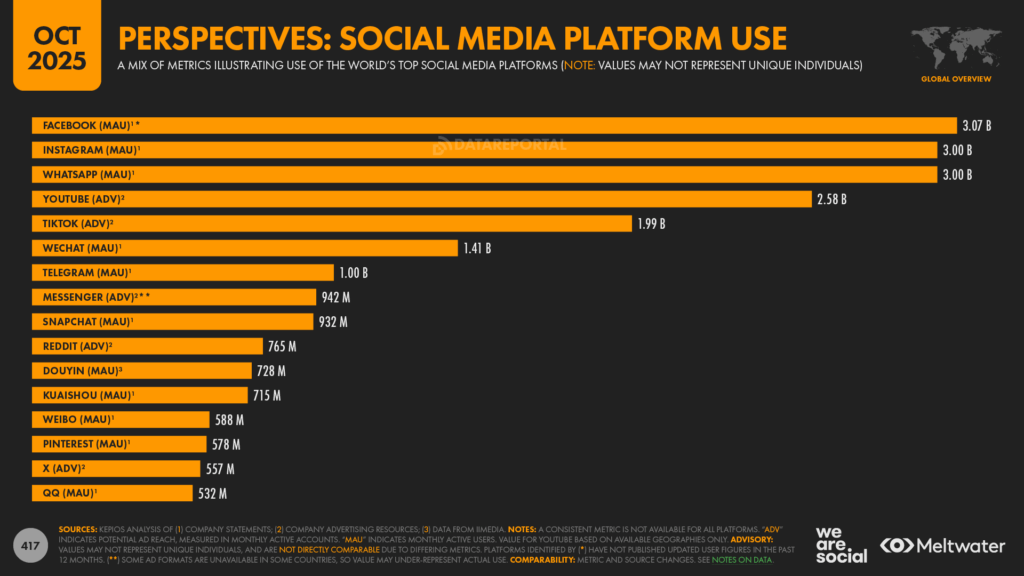
Source: Data Report

Many brands post there, but mostly as a place to store video content. Expect that to change. In 2026, more will build consistent YouTube strategies, recognizing it as a true social channel. Genetech is already starting this with both consistent uploads of shorts and normal videos. I’ve seen other life science brands repurposing videos for other social platforms on YouTube.
Historically, YouTube has been a space for influencer campaigns rather than branded content. But with the rise of Shorts, now surpassing long-form in ad revenue, it’s becoming a must-have for both paid and organic strategies.
- Corporate Comms Explore Threads & Bluesky
Threads is projected to overtake X in daily active users by 2026, and Meta recently appointed a dedicated leader for the platform, a strong signal of long-term investment. Threads has also introduced its own version of Communities, similar to X’s communities, with active HCP and disease-state discussions already forming.
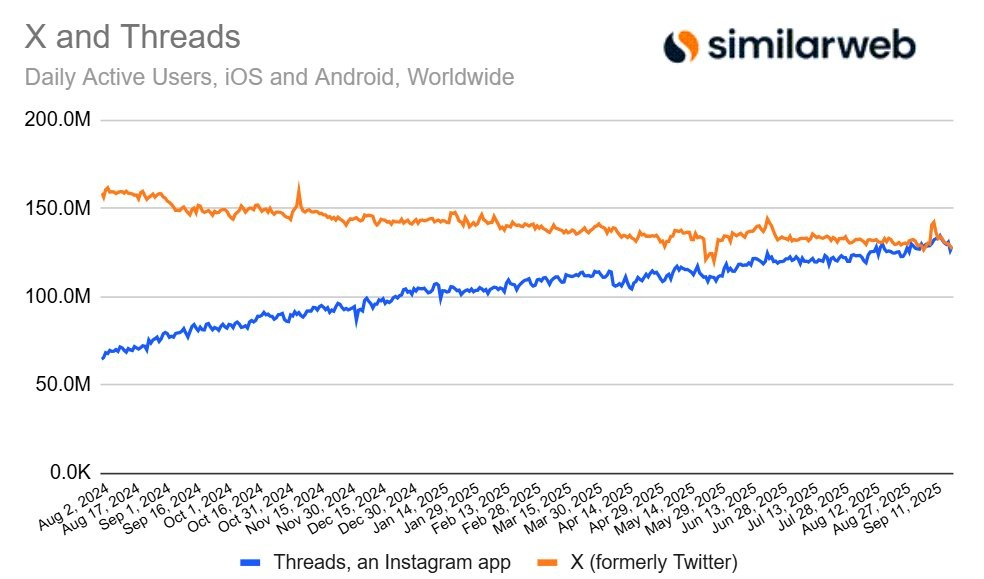
Source: SimilarWeb via Threads
A few life science brands are already active:
- GSK US @gskus
- Amgen @amgenbiotech
- Boehringer Ingelheim @boehringer_ingelheim
The early adopters here will set the tone for broader industry participation. And with medical conferences being active on the platform, you are missing a major HCP play if you are not posting.
They’ve been updating lots of features that would have made it hard to run a life science account in the beginning.

- Battle of AI vs. Authentic
All through 2025, we’ve watched the internet argue over AI. A brand posts an AI-generated image, commenters roast it, and the post gets deleted. Then another brand takes an anti-AI stance and gets applauded.
But with tools like Sora, Meta Vibes, and xAI entering the mainstream, AI-generated content is starting to find its audience. Younger users are already engaging with “Italian brain rot” memes and AI-generated influencer videos. Like it or not, humor is the first step toward acceptance.
Major companies are pouring millions into AI-generated creative, but results are still unclear. Expect a divide in 2026: large corporations doubling down on AI automation, and smaller brands leaning into raw, human-feeling content that embraces imperfections on purpose. I think in the end what will matter the most to consumers is not if a piece of content was created with AI, but whether or not it resonates with them. A bad piece of content is still a bad piece of content, whether or not it was made with AI.
_________________
Social is evolving, quickly. If you’re showing up on platforms only to broadcast your message without any real community management or engagement strategy, you’ll find social media won’t perform the way you expect. The future of social belongs to the brands that listen, respond, and build relationships. Not just the ones that post.
Reagan Castleman is the Social Media Manager for LiveWorld’s social profiles. She enhances audience engagement through effective strategies that leverage both paid and organic channels. She can talk about social for literally hours, and when she is not talking about it, she is researching all the little intricacies of each platform to make sure the social strategy for LiveWorld is current.